The First International Conference on Iran and the New World Order:
Developments Following the War with the United States and Israel
Center for Advanced International Studies, University of Tehran, October 26, 2026
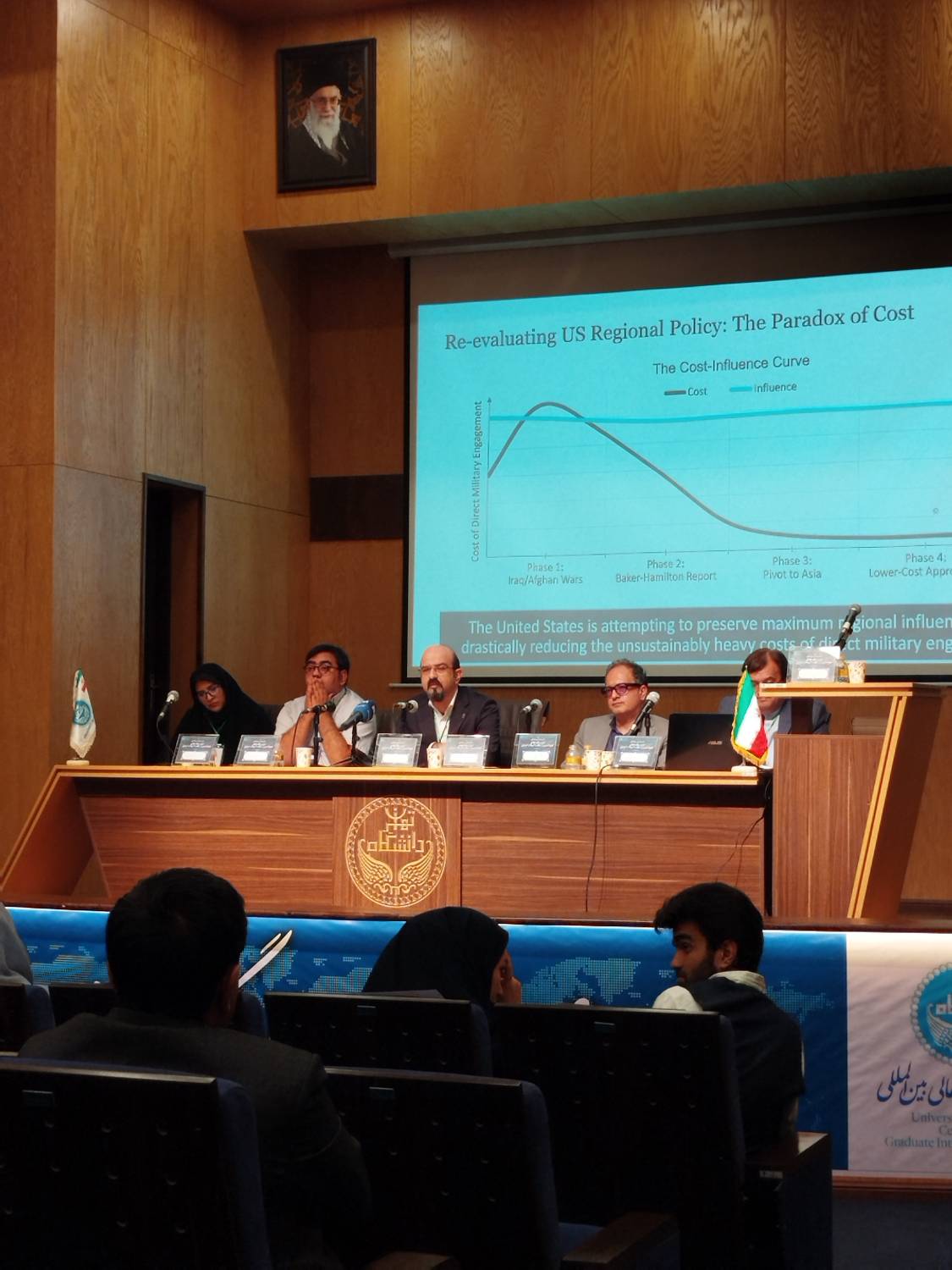
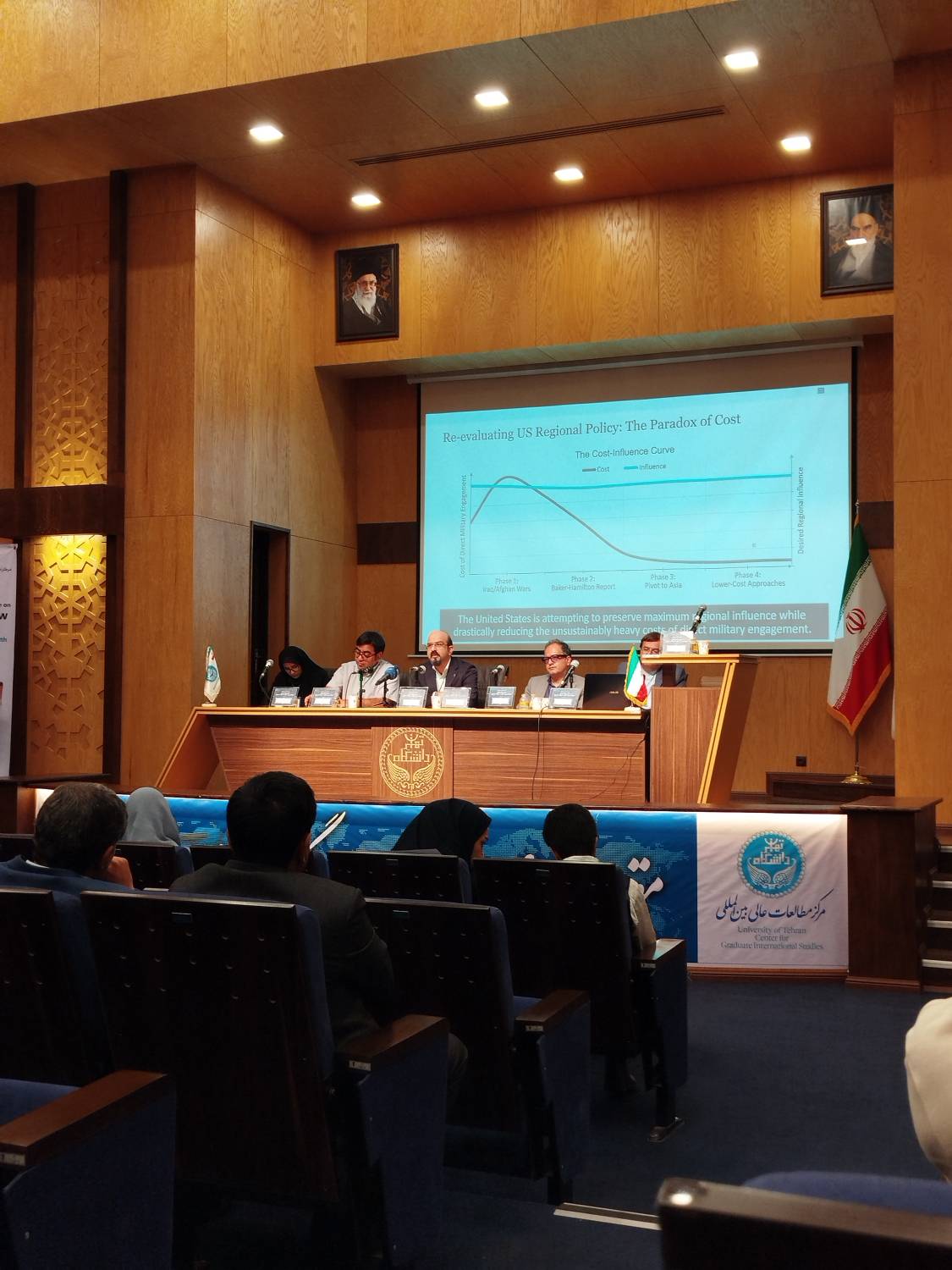
Analysis of the War Waged by the United States and Israel against Iran within the Post-Polar Framework
Sasan Karimi, Assistant Professor, Department of Contemporary Iranian Studies, Faculty of World Studies, University of Tehran, Tehran, Iran
Abstract
The war waged by the United States and Israel against Iran cannot be analyzed merely as a military conflict or as an event confined to the aggression of two external actors against the Islamic Republic of Iran; rather, it should be understood within the context of structural transformations in the global and regional orders and within the framework of changes in the patterns of power distribution and exercise. The central question of this study is what picture the war and its aftermath provide of Iran’s surrounding environment and its position within the emerging global order, and to what extent the Islamic Republic of Iran possesses the capacity for agency and for shaping the conditions it faces. The study’s central premise is that the international environment is not an entirely rigid and predetermined structure; rather, an actor’s position depends not only on its material resources but also on how it perceives its environment, formulates policy, and exercises agency.
Within this framework, the concept of a “post-polar order” is employed to explain the characteristics of the contemporary world: an order in which the sources of power have become more diverse, the number of relevant actors has increased, and the distribution of power has become more diffuse. In a post-polar order, the state remains one of the most important actors, but organizations, corporations, financial networks, media, technologies, and other transnational actors also play a role in shaping the international environment. From this perspective, being a “pole” does not merely mean possessing greater material power; it also requires a relatively comprehensive combination of material, organizational, diplomatic, and ideational capabilities, together with a distinctive position within the distribution of power. In such an environment, even major powers face growing constraints on the direct exercise of their will and are consequently compelled to calculate the costs and consequences of their actions.
The developments of recent decades in U.S. policy toward West Asia can likewise be reassessed within this framework. The experience of the wars in Iraq and Afghanistan, the heavy costs of direct military involvement, the Baker–Hamilton Report, the Obama administration’s discourse on the “pivot to Asia,” and Washington’s subsequent efforts to employ lower-cost approaches all indicate an attempt by the United States to preserve its regional influence while reducing the costs of direct engagement. Nevertheless, developments in the region have demonstrated that reducing the U.S. presence is neither a simple nor a fully controllable process, and that regional actors, including Israel and the southern Persian Gulf states, can influence Washington’s calculations and policy orientations.
The war with Iran made this logic even more apparent. The war demonstrated that reliance on military power alone does not necessarily produce the anticipated outcome, even for an actor with extensive capabilities such as the United States. Iran’s response and the regionalization of the conflict complicated the initial calculations and demonstrated that, in a post-polar order, military power remains fundamentally important but is not, by itself, determinative of the outcome.
Problem Statement and Significance of the Study
The war waged by the United States and Israel against Iran cannot be analyzed solely within the framework of a military conflict or confrontation among several states; rather, it has unfolded against the backdrop of transformations in the structure of the global and regional order and changes in the patterns of power distribution and exercise. The central question of this study is what picture this war and its aftermath provide of Iran’s strategic environment within the emerging global order, and to what extent Iran can play a role in shaping this environment and determining its future position.
The significance of this issue stems from the fact that recent developments have revealed both the limitations of major powers’ reliance on military power and the need to reconsider the concepts of power and agency within a “post-polar” order. In such an order, power is not confined to military and economic capabilities; diplomatic, geographic, organizational, and ideational capacities, as well as the ability to build coalitions and influence the behavior of other actors, are also of importance. Accordingly, examining the war and its consequences can contribute to a more precise understanding of Iran’s opportunities and constraints, as well as the requirements of its foreign policy in the emerging global order.
Main Research Question
What does the war waged by the United States and Israel against Iran and the subsequent developments reveal about Iran’s position and strategic environment within the post-polar order, and to what extent does Iran possess the capacity for agency and influence over the formation of this order?
Sub-questions
1) What limitations in the pattern of U.S. military and strategic power projection in the region were revealed by the war waged by the United States and Israel against Iran?
2) What opportunities and constraints does the post-polar order create for Iran’s agency?
3) How can Iran transform its geopolitical, diplomatic, military, and ideational capabilities into effective power within the regional and global orders?
4) What possibilities for redefining regional security arrangements and Iran’s role within them have emerged from the post-war developments?
Main Hypothesis or Argument of the Study
The central argument of this study is that the war waged by the United States and Israel against Iran and the developments that followed it are less indicative of a return to an order based on the predominance of a single power or on military power alone than of the characteristics of a post-polar order and the limitations of unilateral power projection. In such an order, Iran’s position depends not merely on its material and geopolitical resources, but also on its ability to translate these capabilities into effective power through diplomacy, coalition-building, regional agency, ideational power, and strategic decision-making. Accordingly, the post-war developments may constitute a strategic juncture for Iran, enabling a shift from reactive responses toward greater initiative and more active participation in shaping the emerging regional and global order.
Methodology
This study adopts a qualitative research approach. The research data were collected through the examination and analysis of library-based sources, official documents and reports, statements and positions of political officials, and relevant studies addressing the war and transformations in the global and regional orders. In analyzing the data, the war waged by the United States and Israel against Iran and its consequences are examined within the conceptual framework of the post-polar order. The study seeks to analyze the opportunities and constraints facing Iran’s agency, as well as the implications for its foreign policy in the emerging environment, by explaining changes in the sources and patterns of power projection.
Theoretical Framework or Analytical Approach
The theoretical framework of this study is grounded in the concept of the post-polar order. From this perspective, the international system is understood not in terms of two or more dominant poles, but rather as an environment characterized by a diffuse distribution of power, a multiplicity of actors, and a diversity of sources of power. Power within this framework is not confined to military and economic capabilities; factors such as diplomatic, geopolitical, technological, organizational, and ideational power, as well as the ability to build coalitions, are also important in determining the position of actors. Accordingly, the study analyzes the war waged by the United States and Israel against Iran and the developments that followed from the perspective of changes in the patterns of power distribution and power projection, the limitations of unilateral power, and Iran’s capacity for agency. The analytical premise is that, in a post-polar order, the position of states depends not merely on the resources at their disposal, but also on their ability to transform those resources into effective power and to participate in shaping regional and global arrangements.
Main Findings and Conclusions of the Study
The findings of the study indicate that the war waged by the United States and Israel against Iran cannot be explained solely in terms of the balance of military capabilities and that the war exposed the limitations of unilateral power projection, even by major powers. Iran’s response and the expansion of the war’s regional scope and consequences demonstrated that, in a post-polar order, military power remains fundamentally important but is not, by itself, determinative of the outcome of conflicts. Factors such as geography, resilience capacity, diplomacy, coalition-building, and ideational power also play an important role in shaping outcomes.
The post-war developments further indicate that changes in the pattern of U.S. presence in the region may create conditions for redefining regional security arrangements. Under these circumstances, Iran’s future position depends less on the sheer extent of its resources and geopolitical advantages than on the quality of its agency and its ability to transform these capabilities into effective power. Accordingly, the purposeful use of its geopolitical position, active diplomacy, the establishment of regional arrangements and coalitions, the reduction of unnecessary costs, and a shift from reaction to initiative constitute important requirements for enhancing Iran’s role in the emerging order. On this basis, the post-war developments can be regarded as a strategic juncture for redefining Iran’s position within the post-polar order.
Keywords: Iran, war, Middle East, foreign policy, post-polar order, power, agency
File