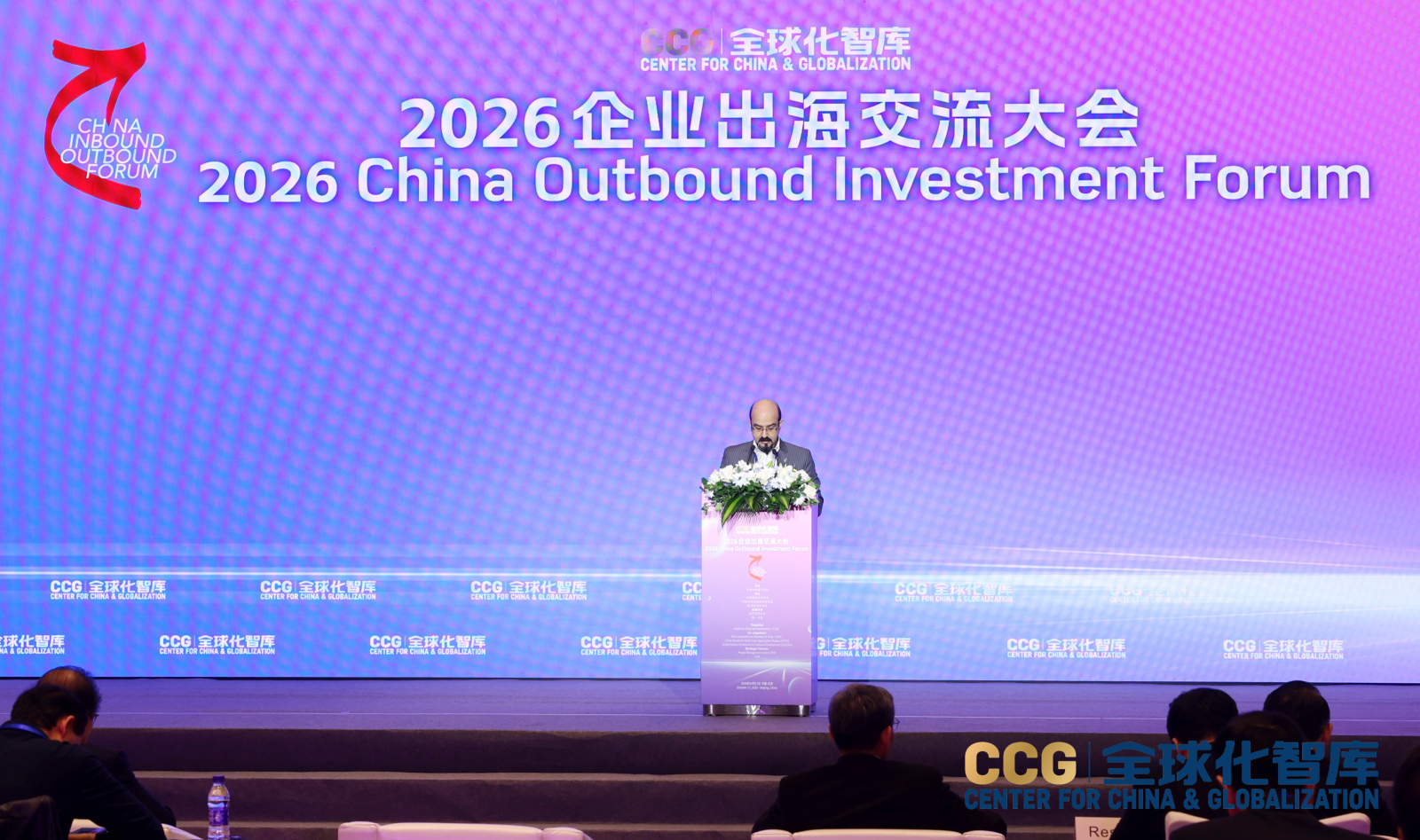
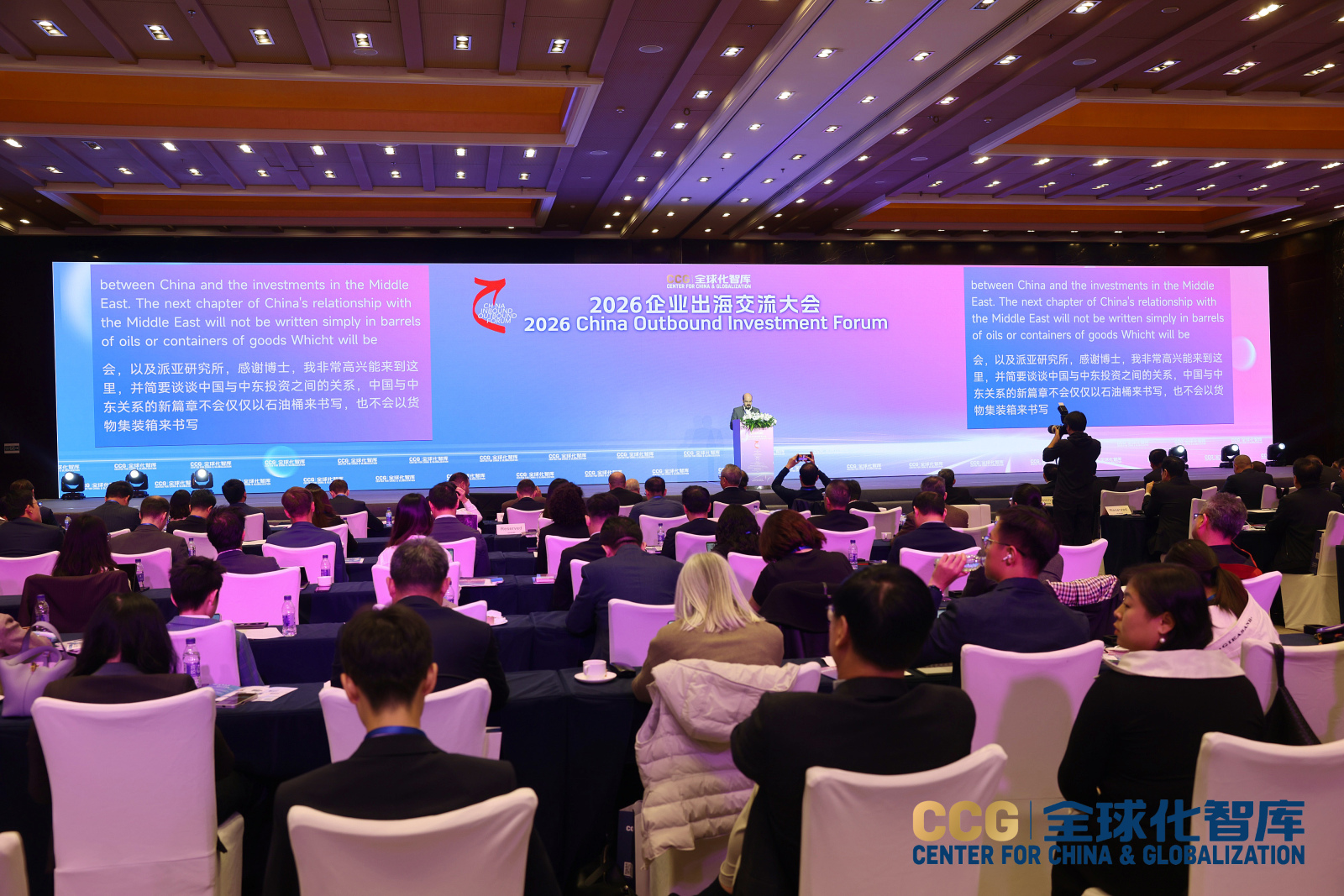
Keynote Speaker at the 2026 China Outbound Investment Forum
Center for China and Globalization, Beijing China,17 October 2026 -
Excellences, distinguished guests, ladies and gentlemen,
The next chapter of China's relationship with the Middle East will not be written simply in barrels of oil or containers of goods. It will be written in factories, power systems, digital networks—and the businesses we build together.
The defining opportunity is partnership: combining China's industrial capabilities with the Middle East's capital, development ambitions and position at the crossroads of international trade.
Energy remains the foundation. But it is no longer the whole building. The relationship is broadening into renewable energy, advanced manufacturing, logistics and the digital economy. That creates a much wider commercial agenda—and a much more demanding one.
Consider the direction of business confidence. PwC's 2025 survey of 136 Chinese companies found that nearly 90 per cent planned to enter or expand their presence in the Middle East. Saudi Arabia and the United Arab Emirates were the leading destinations. This is a survey, not a measure of completed investment—but it is a clear signal of corporate intent.
The question is no longer simply: "Is there an opportunity?" The question is: "Who will turn that opportunity into durable value?"
I see four priorities.
- First, move from energy trade to energy industries.
Oil and gas will remain important. But alongside them sits an expanding opportunity in solar power, batteries, electricity networks and the manufacturing that supports them.
We already have concrete examples. In 2024, Chinese companies partnered with Saudi Arabia's Public Investment Fund on solar and wind-related manufacturing ventures. The significance is not merely the equipment being supplied. It is the prospect of building industrial capabilities inside the region.
That should be our ambition: not only to import the technologies of the future, but to manufacture, maintain and improve them locally.
- Second, move from selling products to building productive capacity.
The Middle East should be more than a destination for Chinese exports. It can be a base for joint production, regional distribution and services.
Chinese businesses are increasingly looking beyond representative offices towards operating companies, while the region's diversification programmers create openings in manufacturing and technology.
For investors, the test should be practical. Does a project develop local suppliers? Does it train people? Does it have customers beyond a government announcement? Can it compete without permanent subsidy?
A signed memorandum is a beginning. A competitive business is the achievement.
- Third, connect markets—not just infrastructure.
The Middle East's geography offers a powerful advantage between Asia, Europe and Africa. Chinese investment in ports, transport and trade infrastructure reflects that importance.
But a port alone does not create a commercial hub. Its value depends on the ecosystem around it: efficient customs, warehousing, finance, reliable transport and firms that actually use it.
The opportunity is therefore bigger than construction. It is to make supply chains work better—and help businesses reach customers faster, more reliably and at lower cost.
- Fourth, build the digital economy with trust at its center.
Chinese companies already participate in the region's telecommunications, cloud and smart-city infrastructure. That creates opportunities extending into industrial digitalization and business services.
But digital investment requires more than technical performance. Our standard should include clear rules for data, robust cybersecurity and confidence that systems will remain dependable over their operating lives.
Trust is not an obstacle to investment. It is what makes investment sustainable.
Now, we should be ambitious—but not naive.
The Middle East is not one market. Different countries offer different opportunities, regulatory environments, and levels of risk.
Nor does commercial opportunity erase geopolitical exposure. Investors must examine sanctions, technology restrictions, shipping disruption and the resilience of their supply chains. China's growing regional role operates within a wider strategic contest, not outside it.
The right response is neither complacency nor paralysis. It is disciplined investment: realistic demand forecasts, credible partners, enforceable contracts and projects that can withstand difficult conditions.
Looking ahead, my argument is simple.
The strongest opportunities will come where Chinese capabilities meet genuine regional needs—and where both sides commit to building something lasting.
For Chinese businesses, that means becoming local partners, not simply overseas vendors.
For Middle Eastern investors, it means using capital to acquire capabilities, not merely assets.
And for governments, it means rewarding delivery: skills, productivity, innovation and commercially viable growth.
The past was about exchanging energy for goods.
The future can be about combining capital, technology and talent.
Let us judge that future not by the number of agreements we sign, but by the competitive industries, skilled jobs and enduring businesses we create.
Thank you.
File