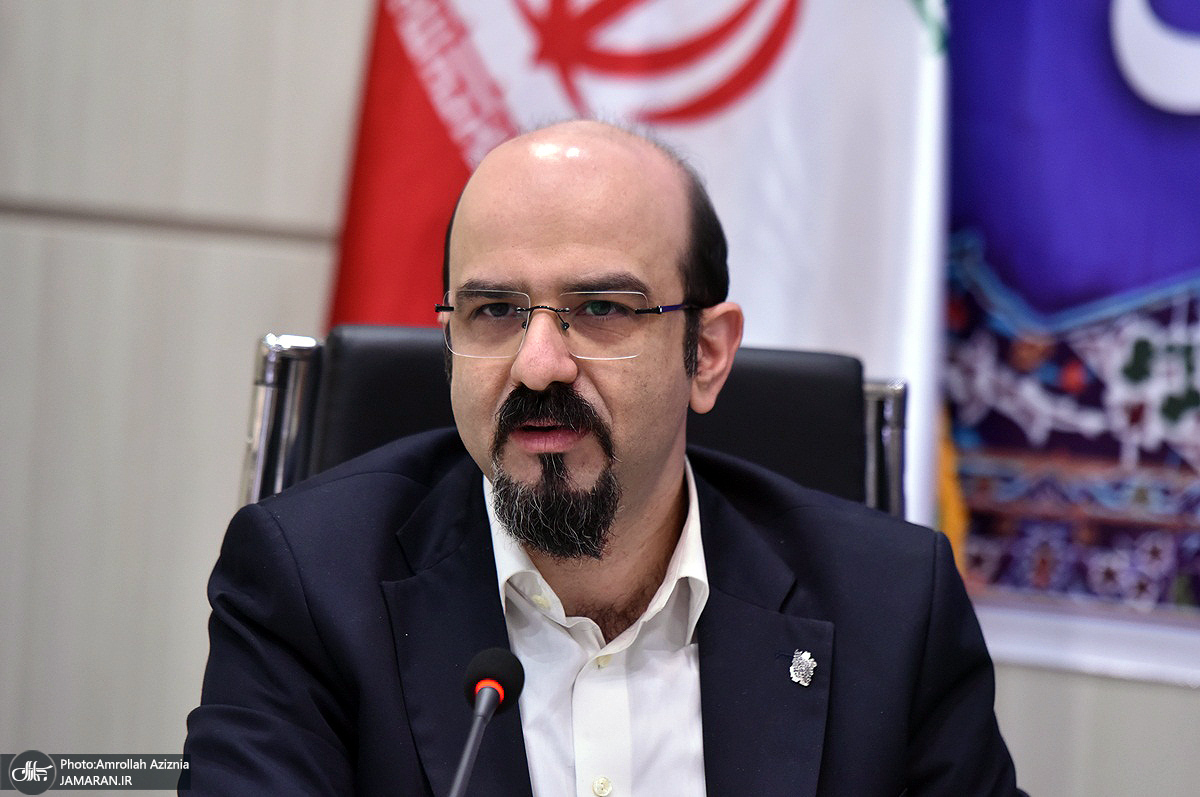
According to a Jamaran reporter, Sasan Karimi spoke at a specialized seminar titled "Iran-US Conflicts: Roots, Trends, and Future Prospects," held at the Imam Khomeini and Islamic Revolution Research Institute. He stated that the current international order is a "post-polar" system; it has shifted away from a bipolar structure, yet it has not evolved into a unipolar world defined by American hegemony. In this post-polar system, no single nation can serve as the sole pole, nor are the actors limited exclusively to states. Sources of power—such as military forces, economic activity, and commerce—are no longer the monopoly of the state; the same applies to the media.
Noting that the United States has altered its strategic approach toward the region, Karimi explained: "A common misconception we hold is the belief that the Americans are adamant about maintaining a 'physical presence' in this region, and that our task is to expel them. That is simply not the case! Following the Iraq War—around 2006, I believe—two former US Secretaries of State authored a report arguing that the invasion of Iraq and the broader strategy employed in the Middle East were actually detrimental to American interests."
Karimi continued: "In 2011, then-Secretary of State Hillary Clinton wrote an article explaining that America’s priority was to extricate itself from the 'trouble' of the Middle East and pivot toward the East—specifically toward China—making the containment of China its primary objective. What does this signify? Has the US suddenly become a 'good boy'? Certainly not! It has no intention of abandoning its interests; however, maintaining a physical presence has become too costly. Consequently, the US is shifting its approach toward 'indirect influence'." In other words, the aim is for the governments in this region to remain aligned with the U.S. and to manage the regional order in a manner that serves American interests. However, maintaining a heavy physical and military presence is no longer an attractive proposition for the United States, as the associated costs and damages are simply too high.
He emphasized that the "Mecca Pact"—or similar mechanisms—is essentially a response to the fact that the U.S. has failed to directly involve Arab nations; instead, it has left them feeling insecure, while the American presence has become a costly burden for them. Furthermore, regional states themselves are no longer keen on a heavy military presence. Yet, there are powerful lobbies that oppose the current trajectory—the U.S. pivot toward the East—and they are doing everything in their power to keep the United States anchored in this region.
A faculty member at the University of Tehran’s Faculty of World Studies noted that Israel is actively trying to ensure the U.S. remains deeply entangled in the region. He explained that the current American approach aligns with the U.S. "National Security Strategy," which states that the United States is not prepared for long-term, high-cost conflicts—except, perhaps, within its own Western Hemisphere. The American preference is to conclude wars in under ten days. Much like the 12-day conflict—where they delivered a swift, decisive blow and then ended the engagement—they strongly prefer to strike quickly and then step back.
He added: "What the Americans are pursuing—whether in peace, war, or negotiations—is primarily the reduction of their own costs in this region, while maintaining their influence through proxies such as Turkey, Saudi Arabia, Israel, Pakistan, and Qatar. This is the perspective we must adopt. If this is the case, then there are corresponding strategies we can employ to pursue our own interests; in some instances, our interests actually align with the U.S. withdrawal from the region, while in others, they stand in opposition."
Karimi noted: "Iran’s defensive capabilities have reached a point where the country can ensure its own security—independently and self-sufficiently. While we may not currently be a global economic power, as the Supreme Leader has stated, the era of 'hit-and-run' [striking without consequence] is over! It is truly over; even the United States knows that if they strike, we will strike back. Name another country in the world that, upon being attacked by the United States, would immediately retaliate. This single nation has stood firm against the most powerful militaries on the globe."
He continued: "Consequently, we have realized an aspiration that has persisted since the Qajar era—a burden carried through the Qajar and Pahlavi dynasties, and inherited by the Islamic Republic: the question of whether we could ever become self-sufficient. Prior to the Islamic Republic, every war we fought resulted in the loss of territory—Armenia, the Caucasus, Herat, Bahrain... and during the Second World War, the country was even occupied. Yet, we have finally reached a point where we can declare: 'If you strike, we will strike back.'" A faculty member at the University of Tehran’s Faculty of World Studies noted: It is not just the military sphere or armed forces; during a crisis, the entire population stands firm, continues with their lives, holds their ground, and generates the necessary discourse. This is no longer the "Qajar-era Iran"! No one desires war, but should it ever be imposed upon us, we will defend ourselves.
Elsewhere in his remarks, he emphasized: The task of a diplomat—or, more precisely, a foreign policy architect—is to devise a strategy that ensures the country does not find itself trapped in a "dilemma between surrender and destruction." Otherwise, if the question posed is "What should we do?", the answer is unequivocally: we must not surrender! Good and effective governance entails conducting policy in such a way that, for the foreseeable future, the nation never faces such a dilemma.
Karimi stated: A second point to consider is that "we consistently make decisions too late." Foreign policy is akin to playing tennis. Imagine a tennis player; what happens if they swing their racket two seconds too late? It is crucial to make the decision and strike the ball at the exact right moment. If you act too late, you lose—and then you might claim, "It didn't work!" But the moment for action had already passed. Our foreign policy is characterized by a form of "delayed realism," which frequently lands us in trouble.
He stressed: If we are to achieve development and extricate ourselves from these crises, we must recognize that we are not an "exceptional country." We need to accept the reality that we are not, in fact, the world's top priority. So, why are we a priority for Israel? Since Israel requires an enemy within the region, it has—since 1994—pursued a strategy to position us, rather than itself, as the adversary of the Arabs and the broader region; a policy it continues to implement today. However, from the perspective of the United States and other international actors, we are not an exceptional or uniquely prominent nation whose entire dynamic with the rest of the world operates on a different plane. It is simply not the case that the fate of the world rests in our hands; such self-perceptions are counterproductive. Therefore, we must first correct the image we hold of ourselves.
A faculty member at the University of Tehran’s Faculty of World Studies added: Fundamentally, we must structure our approach so as to avoid becoming a focal point of friction or negative global attention. We need not—and should not—constantly be at the forefront of crisis-related news! Sometimes, there is a misguided sense of satisfaction in being the top headline. In the autumn of 2024, I wrote that the period between the U.S. election in November and the inauguration of a new president in January—when the incoming administration prepares to enter the White House—represents a "golden opportunity." During this window, nations—from Japan to European states—engage in lobbying efforts in the U.S., seeking meetings to ensure they are no longer in the crosshairs of attacks, removed from the top of the news cycle, and taken off the list of hostile priorities for the other side. We could have done the same; in fact, we proposed it.
He noted: Even our regional "friends" act this way; in order to avoid being the primary target of U.S. pressure, they effectively shift that focus onto us! As for our adversaries, their stance is clear—they promote "Iranophobia." Yet, even our regional friends and allies, seeking to lighten their own burden of pressure, push us to the forefront, leaving us caught in the thick of the conflict. Consequently, due to these very miscalculations, we have—needlessly—become the primary focus of crisis and confrontation. Things should never have reached this point.
Karimi emphasized: True diplomacy lies neither in making unilateral concessions—such as those regarding the nuclear dossier or the status of the Strait of Hormuz—nor in mere stubborn resistance and blind, unyielding intransigence. Sheer persistence, devoid of diplomatic initiative, cannot be considered a skillful approach. Furthermore, such a stance risks provoking the other side—potentially leading to strikes, national losses, and casualties—or, at the very least, leaves the country in a precarious position; neither scenario reflects true statecraft or superior strategic thinking. Superior, creative thinking lies in the ability to forge a "third option." Such an option is entirely feasible to develop and formulate—indeed, it has already occurred to some, and models for it exist—but the core issue remains the political will required to implement it.
He added: The path out of the current situation certainly does not lie in either of the two extreme, "lose-lose" scenarios. Rather, it requires creating options that redefine the variables for both sides. Trump is determined not to exit this fray without a clear image of "victory"—he cannot afford to appear defeated. This is achievable, provided that his "victory" is not defined as our "definitive defeat." If the equation is structured such that his victory necessarily equates to our defeat and humiliation, he will certainly not succeed, and Iran will never accept such terms.
A faculty member at the University of Tehran’s Faculty of World Studies noted: Sophisticated and intelligent foreign policy design involves aligning conflicting interests. Such an alignment is entirely possible at this juncture. My concern, however, is that these warnings and proposals may once again go unheeded—only for officials to claim, two months from now—after further costs have been incurred and the crisis has deepened—that they "tried our approach, but it didn't work." Unaware that, once again, they failed to correctly calculate the variables of time and cost.
He added: The "third approach" relies fundamentally on understanding Trump’s psychology and engaging within the realm of his "prestige" and political standing. If Trump can claim—in the eyes of public opinion—that he has helped untangle part of the intractable knot that has persisted between Iran and the U.S. for decades, then, through a clever strategy on our part, many concessions could be secured. We must first clarify our own vital goals and priorities regarding the United States and address them; a policy based solely on absolute negation—simply saying "no" to whatever is proposed—is neither logical nor constructive.
Karimi emphasized: If we intend to learn from China’s development model, the first lesson is that a nation cannot have 156 "top priorities"! You must establish a single, clear, and consensus-building primary priority for the national interest, and organize all foreign policy relations around that central pillar. If the objective is for the country to move forward—to ward off threats, end direct U.S. interference in the region, isolate and corner Israel, and pave the way for national development—then we must refine our perspective on this overarching priority.
He stated: To achieve this goal, must we necessarily grant tangible, real concessions? My answer is no! There is absolutely no need to surrender fundamental concessions. In today’s world, a "narrative" can be "sold" far more effectively—and at a higher value—than an actual, substantive concession. You can craft such clever narratives that Trump could use them to project prestige before the entire world—parading a "historic agreement"—while, in reality, control over the Strait of Hormuz remains firmly in our own hands, we continue to advance our peaceful nuclear program on our own terms, and we concede nothing regarding our defensive and missile capabilities—all while successfully containing the crisis.
A faculty member at the University of Tehran’s Faculty of World Studies noted: Today, the arena of diplomacy is less about the exchange of material assets and more a battlefield of narratives and the management of the psychological landscape—precisely the strategy that has been employed against us for years. The Israelis did exactly this with Iran’s nuclear dossier: they conjured a massive global security crisis out of "nothing" and transformed it into a tool of pressure against us. Our recurring mistake has been falling, time and again, into the very trap they have laid for us; they constantly construct an image of a threat, and we—unwittingly—play along within that framework, fearing that unless we adjust a certain aspect, the threat will materialize.
In conclusion, he emphasized: "As someone whose initial academic background—at both the bachelor’s and master’s levels—is in nuclear physics, and speaking from a position of technical and objective understanding, I can state that the situation is not—for a thousand and one reasons—the military threat it is portrayed to be. Anyone who tells you that mere insistence on current forms of deterrence creates absolute security is, in large part, simply engaging in empty rhetoric." True deterrence lies in a clever narrative game: preserving the foundations of national power, effectively managing strategic tools, and disarming the adversary on the psychological and propaganda fronts.
Link

File