"Policy Report" in the PAIAB Think Tank Magazine
Magazine No. 1, Summer 2026 -
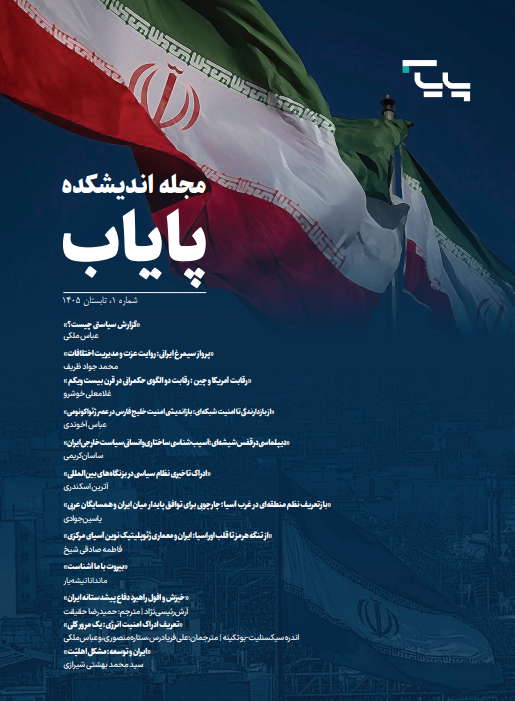
The original text is in Persian and the following translation was done by Ai.
Abstract: No country's foreign policy can be understood and managed competently solely with the two tools of "official positioning" and "rational cost-benefit calculation." These two elements, although necessary, are at best only the surface of the story. The reality of decision-making in foreign policy, like in any other field, is shaped by hidden psychological, organizational, generational, structural, and cognitive layers; layers that are sometimes overlooked by external observers and even by decision-makers themselves. In post-Islamic Revolution Iran, these hidden layers have become more intense and rigid due to the long persistence of a particular generation at the helm, the dual structure of power, ideological pressures, and economic-security constraints, especially in the diplomatic apparatus. The present article attempts to formulate the main shortcomings of decision-making and implementation in the Ministry of Foreign Affairs and in general the foreign policy of the Islamic Republic of Iran; Not with the intention of offending, but in the hope that accurate recognition of these damages will be the first step in improving and enhancing the efficiency of the country's diplomacy.
The official position in foreign policy is as meaningful as a mere cost-benefit calculation. If the official position is wrong or incomplete, it can certainly become a source of harm and excuses for the enemies of a country or political movement, but equally, official positioning and policy-making based on a mere cost-benefit calculation are far from reality. The reality we are talking about is not only subject to measurable external conditions. In foreign policy analysis books, there are many cases of what can distance "decision" from "calculation". The politician, policymaker, expert and other levels of politics in any decision system, as well as the relationship between them, have psychological and organizational characteristics. These damages are generally as follows:
1. Bureaucratic politics: The organizational and hierarchical relationship in the decision-making system is one of the most important obstacles to policy-making and bold decision-making. The conscious and unconscious "boss-subordinate relationship" causes other calculations to prevail over the cost and benefit based on national interests. In opposition to the opinion, judgment, and decision of the senior official, whether spoken or unspoken, administrative, political, and sometimes even security costs are assumed and assumed for the subordinate.
Therefore, it is natural that if conscious and separate effort is not expended, the subordinate will not be sufficiently prepared to pay such a cost in the first place and as a rule. However, this is fundamentally in conflict with the pursuit of national interests. For example, someone who is employed by the Ministry of Foreign Affairs, although serving national interests and advancing the goals of the Ministry of Foreign Affairs, is also a subordinate of his managers.
Therefore, if he has a difference of opinion with his managers, he should express it. This mental barrier is not limited to employees, of course, and it also exists for higher managers up to the level of ministers.
In fact, the field of expertise, unlike execution, is not a field of imitation and obedience. However, reality never occurs in accordance with this meaning by default, and experts and lower ranks naturally always "respect" the opinion and intention of their superiors unless there is training, will, and organizational authority for this. As if by chance, sometimes an expert is more correct than his superior to express a precise, detailed, and specialized opinion, and this difference of opinion should be seen and used as an opportunity.
2. Group think: The next damage that mainly affects the decision-making system and its distance from the Rational Actor Model is "group think". When the group has the same opinion and cannot tolerate an opposing instrument, or the weight of the group leader or senior leader is so great that this confrontation, whether by momentary isolation or by exclusion and expulsion from subsequent groups, inevitably marginalizes the minority in the group, and the dominant thought, analysis, and narrative will be approved and finalized without being sufficiently challenged. This may sometimes have consequences that are far from national security and interests.
3. Organizational Politics: Another notable vulnerability is organizational politics. When different organizations that are in charge of different parts of a decision or project engage in asymmetrical competition in decision-making and implementation, regardless of the costs of erosion of these intra-governmental competitions, the most important damage that results from this competition is "undermining the non-transparency of the scene for the politician." Giving priority to the organization, its role and centrality in many cases leads to changes in the approaches, decisions and effective priorities of statesmen. A very important example of this damage is the US war in Iraq in 2003, which, according to intelligence reports, Iraq was suspected of having weapons of mass destruction. This competition, which was ongoing between intelligence agencies, the National Security Council, the State Department and the Pentagon, and ultimately, with organizational analysis, gave the round to the military and security forces, meant paying billions of dollars in costs and the lives of American soldiers for the United States.
4. Polyheuristic policymaking: At the same time, considering the rulers' point of view, background, age, etc., it is even possible in a decision-making structure to make a calculation-based choice after ideological elimination of some options. This type of decision-making is actually a combination of calculation and political psychology, so that after taking into account the preferences of the decision-making agent, the choice between the remaining options will be based on calculation.
With this introduction, if we analyze the current damage to Iran's foreign policy in the current era, we can briefly mention the following afflictions:
1) The first ruling generations: The reality is that Iran today is historically in a situation where, due to the passage of several decades since the revolution, the first and second generations of officials, although they are at the end of their career paths, have not yet handed over the reins of power to the next generations as they should. The "excessive sense of belonging" of the first generations, who coincidentally also have other positive characteristics, has caused the next generations to lack authority in the country's institutions, including the Ministry of Foreign Affairs, despite their sufficient and sometimes excellent education and experience.
The reality is that the aforementioned generations, who were in their early youth at the time of the victory of the revolution, were the first generation to have been mostly literate in their families. As we know, at the time of the victory of the Islamic Revolution in Bahman 1357, the average literacy rate of Iranians was less than three grades. This issue has brought them "early authority" within the family. So that since the beginning of their high school education, they have been able to play a role in expressing opinions, administrative, financial affairs, etc.
This authority was established and strengthened by the Islamic Revolution and the vacating of most of the country's management fields from former officials, as well as by the beginning of the imposed war of Iraq against Iran. In fact, it largely established their historical position in the long period of authority for decisions and authority. Of course, it must be acknowledged that between "a sense of belonging and responsibility on the one hand" and "role-playing and authority" there is a kind of relationship of increasing cycle that can be imagined. That is, the more a person plays a role, the more they feel belonging and vice versa, and this self-increasing cycle continues. Finally, due to the numerous opportunities that the generation has had, in middle age, credibility, financial resources, status and, as a result, self-confidence and the desire to continue being decisive are incomparable among the aforementioned generation.
On the contrary, although the children of this generation, those born in the 1970s and especially in the 1980s, have a high average level of education, due to their location in the middle of the population pyramid and bottlenecks such as the imposed war during childhood, the lack of educational facilities and the resulting intense competition for quality education during childhood and adolescence, the occurrence of sanctions during the prime of youth and the time of productivity, and the lack of comprehensive employment during the period of graduation, they were always in the throes of competition, failure, and difficulty in reaching the field, and as a result, they were largely assigned and retained by people with much lower priorities in each structure. In short, the relative advantage of the child, who was young and often more educated, compared to the father due to being in a higher social, economic, etc. position, was considered a secondary matter. In other words, as much as the father is accustomed to "being great and decisive" continuously from adolescence to old age, the child is accustomed to "being small and determined" throughout his life. It is as if even at the age of 40, the child "must be liked", which affects both the individual's morale and his position in society.
In the country's foreign policy apparatus, despite the existence of legal arrangements, the field that was given to less specialized and less educated 20-year-olds 45 years ago is still not given to educated and even experienced 40-year-olds in the apparatus. But more than being in the aforementioned positions, this difference between the revolutionary-war society and the post-revolutionary-post-war society still casts a heavy shadow on the morale, decision-making, and courage of individuals in making and implementing decisions.
2) Type of employment: Another issue that has been effective in the public space of the Ministry of Foreign Affairs is the type of employment, which, although not legally required, is in practice largely proportional to the output of the Faculty of International Relations of the Ministry of Foreign Affairs. Although there are conceivable exceptions to this, it must be admitted that this practically deprives the Ministry of Foreign Affairs of the best graduates of the country's top universities, and this option is to some extent removed from the choices of graduates of the aforementioned universities. In addition to the fact that outstanding graduates in many cases essentially emigrate from the country and do not see much prospect for their future careers, the same number of those who remain also find themselves practically lagging behind graduates of organizational faculties, including the Ministry of Foreign Affairs, before any action is taken.
3) Excessive surveillance: Constant monitoring of the details of an individual’s lifestyle, words, and thoughts, rather than considering security issues, causes the individual to be under constant psychological pressure and unable to focus on the issues in a relaxed mental state. Especially when dealing with non-Iranians at international events, this issue, along with other known limitations that cause institutional isolation of Iranian diplomats, creates excessive caution for diplomats of the Islamic Republic and basically discourages them from active activism.
4) Economic considerations: The low salaries and benefits within the Ministry of Foreign Affairs have caused the desire to focus on work, especially work within the country, to be minimized, and naturally, a fundamental preference has arisen in sending them to temporary and especially permanent missions within the Ministry of Foreign Affairs. So that a significant part of the mentality of a diplomat, especially a young one working domestically, is forced to spend on how and how to prepare for a mission and on saving money to compensate for losses during the mission. Although this issue is widespread in many government agencies to some extent, firstly, the Ministry of Foreign Affairs is a key point and, like the national team of the country, they are weighed against their counterparts from other countries. Secondly, due to the lack of economy in this agency, individuals are deprived of many of the marginal benefits that are common and normal in other agencies - especially economic agencies. In other words, a young expert with a salary of 300-400 dollars per month cannot be expected to have sufficient focus on foreign policy and diplomacy, nor to have a firm heart and a sense of complete support in an international event in front of diplomats from Western, Arab and Eastern countries who are generally open-handed and have a good support system. In fact, despite its ability, the expert body of the Ministry of Foreign Affairs does not have the motivation and leisure necessary for constant attention and maximum concentration.
5) Conservatism: The exaggerated administrative precautions, the country's position in the global environment, lifestyle issues, as well as financial issues that have been explained, collectively cause courage to become the main missing link in the body of the Ministry of Foreign Affairs and remain solely dependent on the personal qualities and characteristics of individuals. Of course, courage in its professional sense is the mental ability to create a situation, take the initiative and not fall into the old or upper-level routines. As if, of course, naked self-confidence in socializing and conducting formal and informal negotiations will also be accompanied by it. In fact, the dominant and governing structure and arrangements of the Ministry of Foreign Affairs, instead of helping its employees and providing them with psychological support, cause conservatism and self-censorship in the individual, and as a result, weaken the field of initiative of his mind and action.
6) Guild conflict: Another damage that can be seen in the foreign policy of the country, like any other institution, is the possibility of a guild mentality and conflict with the issue of foreign policy. It can be said that in some layers, guild membership is more of what is left for the individual and therefore it is natural that he tries to keep this remainder for himself to a large extent. This causes the foreign policy institution to show structural resistance to seeking help from outside the institution, especially the university. The reality is that in some cases, academics in foreign policy even have significant capabilities in executive matters, but guild competitions (which are widespread throughout the world and are classically considered examples of organizational competitions or organizational politics) in practice prevent this synergy.
This issue can also be seen in the lack of structured and continuous cooperation between the Ministry of Foreign Affairs and think tanks. Think tanks in Iran are either unofficial wings of the apparatus and in fact indirectly justify and explain their positions with the intention of legitimizing them, or they are fundamentally unrelated to power and have no access to information. In addition, sovereign think tanks usually have a kind of fundamental and conceptual contradiction in their essence and cannot transcend the nature, approach, and requirements of the state and sovereignty.
In addition, the following can be added to the above issues at the structural level:
1. Lack of structural coherence and balance in the decision-making process: In the country's sovereign structure, due to the combination of different institutions, the foreign policy apparatus has a weaker position compared to others. This situation turns foreign policy into a kind of "wanderer" where ideological priorities prevail over calculations based on national interests. Similar to what was described in the organizational and administrative politics models, these internal rivalries can lead to imbalances in relations with other parties and move decision-making away from the rational actor model. In fact, this structural damage creates a cycle of incoherence that paralyzes diplomacy and squanders strategic opportunities.
2. Intelligence and Security: Intelligence and analytical failures are also among the neglected damages in the Iranian foreign policy system. If intelligence agencies operate based on ideological assumptions and suppress independent analysis, this leads to “strategic surprise” such as recent Israeli operations against Iranian interests. In foreign policy analysis literature, this phenomenon is known as “mirror analysis”: where decision-makers assume that their adversaries will act like themselves. Similar examples in the United States, such as the misassessment of Iraq’s weapons of mass destruction, show that this damage can be costly and distance foreign policy from external realities.
3. Domestic politics: The influence of domestic politics and the weakness in consensus-building among elites is another damage that affects Iranian foreign policy. Foreign policy often falls victim to domestic partisan pressures, elections, or ideological differences, so that governments act without elite consensus and miss opportunities. In the bureaucratic politics model, this is described as a lack of domestic consensus-building.
4. Cognitive biases: Individual and group cognitive biases beyond groupthink, such as confirmation bias or fear of loss, play a prominent role in Iranian foreign policy decisions. Ideology often filters options and ignores asymmetric risks, leading to a threat-oriented mindset. In foreign policy writing, these biases are called hawkish biases and are prominent in security matters. This bias shifts decision-making away from rational calculation and toward emotional choices.
5. Economy: The link between foreign policy and the economy and weakness in economic diplomacy are another underlying weakness that affects Iran’s foreign policy. Sanctions and isolation have created a vicious cycle that makes economic diplomacy, such as attracting foreign capital, less likely and less successful, and makes foreign policy the main culprit in the economic downturn.
Conclusion: What has been listed in this note is a set of interconnected harms that range from the individual level (cognitive biases, psychological pressure of supervision, inadequate rights) to the organizational level (inhibitory hierarchy, groupthink, organizational politics, guild mentality) and finally the structural-systemic level (institutional incoherence, weak elite consensus-building, faulty link between foreign policy and the economy, lack of transparency and accountability). Although these harms exist in all political systems to varying degrees, in Iran, due to the persistence of the first generation of managers in the decision-making process and the vicious cycle of sanctions-isolation-sanctions, they have become an intertwined and self-reinforcing tangle whose outcome is not in the interest of the authority and power of the diplomatic apparatus and, consequently, in the interest of the country. This situation can be corrected neither by slogans nor by minor changes, but by three simultaneous actions:
a) Structural reforms (strengthening the legal and real position of the Ministry of Foreign Affairs against parallel institutions and creating transparent mechanisms for building national consensus),
b) Organizational and human resources reforms (renovating the generation of managers, reviewing the recruitment and promotion system, significantly increasing the salaries and benefits of domestic service, reducing non-security regulatory pressures),
c) Cultural-behavioral reforms (promoting a culture of constructive criticism, breaking the taboo of groupthink, encouraging professional courage, and reducing the filter of assumptions in selecting options).
Obviously, accurate recognition of these damages is not the end of the matter; rather, it is the beginning of a difficult but inevitable path to restoring the credibility, efficiency, and effectiveness of the diplomacy of the Islamic Republic of Iran in the 21st century.
The report File