Interview with IRNA News Agency May 24, 2025 -
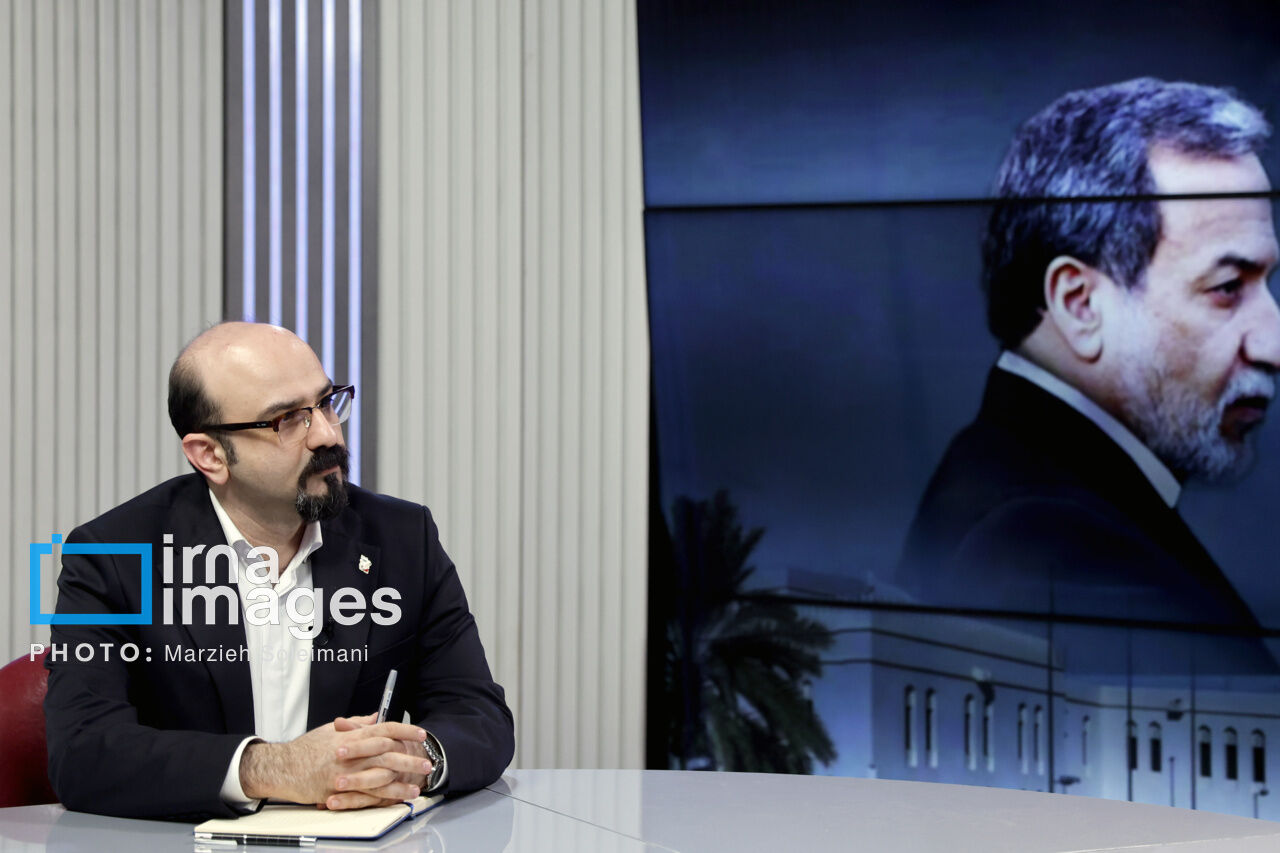
The interview was in Persian and the translation below was done by Ai.
Tehran- IRNA- Referring to the gap in Iran and the United States’ views on key issues, a professor at the Faculty of World Studies at the University of Tehran said: “The gap in the positions of the parties or even the unrealistic nature of some views is not a reason to stop the dialogue, just as the fact that negotiations are being held alone is not a sign of the positive atmosphere or conditions.”
According to IRNA’s Foreign Policy Group, the fifth round of indirect talks between the Islamic Republic of Iran and the United States ended on Friday evening (June 2) in Rome, Italy. Like the previous four rounds, this round of talks was hosted by Oman and mediated by the country’s Foreign Minister. Iranian Foreign Minister Seyyed Abbas Araqchi and US President’s Special Representative Steve Whittaker headed the two negotiating teams. The experience of the five rounds of Iran-US negotiations shows that none of them are similar to the previous rounds or even somewhat predictable.
In order to review the fifth round of negotiations and assess the atmosphere before and after the talks, we spoke with Sasan Karimi, a professor at the University of World Studies and an analyst of international affairs.
Negotiations do not mean agreement
Regarding the reasons for holding negotiations despite all the harsh statements from both sides, the international affairs analyst said: Recently, an idea has been formed in Iran's internal space that the mere negotiation is a kind of achievement or a sign of approaching an agreement; while this is not necessarily the case and the beginning of diplomacy does not mean an agreement. Countries negotiate even in wartime. Therefore, negotiations do not necessarily mean reaching an agreement. It should be noted that "negotiations" are different from "the outcome of negotiations."
Karimi continued: The distance between the positions of the parties, or even the unrealistic nature of some views, whether from the American side or Iran's discomfort with these positions, is not a reason to stop the talks. Conducting negotiations alone is not a sign of a positive atmosphere or conditions. For this reason, the mere fact of holding negotiations cannot be interpreted in a positive or negative sense. What matters is the content of the words spoken during the talks. Otherwise, negotiating alone would not have any special meaning.
Dialogue does not necessarily mean reaching an agreement. It should be noted that "negotiation" is different from "the outcome of the negotiation." Published reports of the negotiations are more positive than the reality inside the room.
Regarding the difference between the issues raised in the media and what is said behind the negotiating table, the university's international relations professor said: "Given the real differences, especially on the main issue, which is enrichment, it is unlikely that there will be much difference between the media space and the content of the negotiation room." In the first to third periods, the differences in views were less due to the focus on generalities, political will, and initial frameworks, and in such an atmosphere, the differences in declared positions in the media and the negotiation room were less, but since the discussion entered more important and sensitive issues such as enrichment, sanctions, enriched materials, and other details, these differences also appeared to the same extent both in the negotiations and in the media space. It seems that the reports published from the negotiations are sometimes more positive than the reality inside the negotiation room.
Evaluation of the three-stage negotiation cycle between Iran and the United States
In evaluating the three-stage cycle including "before negotiations," "during negotiations," and "after negotiations" in the Iran-US talks, Karimi explained: The pattern that is repeated from the beginning to the end of each round of negotiations is almost constant: first, the parties are silent and it seems that they are consulting and making decisions. Then, the American side in particular, by adopting a harsher tone, adopting maximalist positions, and publishing public messages and boasting in the media, tries to create psychological pressure and prepare the Iranian side to enter the next round of negotiations. He continued: "In the next stage, when we enter the official negotiation space, their tone becomes more measured and realistic, although the main content, such as the emphasis on zero enrichment, does not change. The only difference may be in the way solutions and ideas are presented, which are expressed a little more precisely and calculatedly. In the end, although no specific result has been achieved, the two sides agree that the negotiation process has not stopped and neither side should present a negative report on the negotiations. This is a general trend that has also been observed in the last four rounds. Of course, how much this picture corresponds to reality is a question that cannot be easily answered.
Possible proposals are far from Iran's point of view
An international affairs analyst said about the speculations that can be made regarding the proposals put forward by the Omani Foreign Minister: Among the options that can be imagined are ideas such as a "temporary freeze on enrichment", which of course do not seem to be operational. Or plans such as forming a consortium. Iran does not agree with the departure of enriched materials from the country and believes that if this process is carried out outside the borders, it cannot replace domestic enrichment. However, perhaps proposals such as establishing a consortium near the Persian Gulf, but on Iranian soil, are among the ideas that have been put forward.
Stating that these proposals, if implemented, must satisfy both the opinion of the Americans and be consistent with Iran's positions, Karimi said: It seems that there is a long way to achieving such a balance point.
Unfounded expectations will actually benefit the other party
Regarding the timing of an agreement and the expectations that exist in society in this regard, the professor at Tehran University said: Society should continue on its path with the assumption that there may be no agreement. This unfounded expectation will actually benefit the other party and the US, and such conditioning in the market also has negative effects. Therefore, we must realistically prepare ourselves for new conditions because it is unlikely that an agreement will be reached in the short or even medium term that will have a noticeable impact on the country's economic and social situation. As a result, the market and the domestic structure must adapt to the existing conditions.
Evaluating the prospects for the negotiations, Karimi also said: We are at the beginning of a challenging and obstacle-filled path, and in fact, we have not yet entered many of the subsequent challenges and we are engaged in the first challenge, which is the issue of enrichment. Even if we get past this stage, challenges such as the speed and manner of lifting sanctions, determining which sanctions will be lifted, the extent of the US president’s authority to lift them, and the prevention of sanctions from returning in new forms are all important issues. Under US law, implementing these things also requires the support of Congress, and the president alone does not have much power to lift sanctions. Therefore, even if we get past the “enrichment spiral,” the path forward will not be simple and straightforward.
Website Link

File