Interview with Ham Mihan Newspaper, March 6, 2025 -
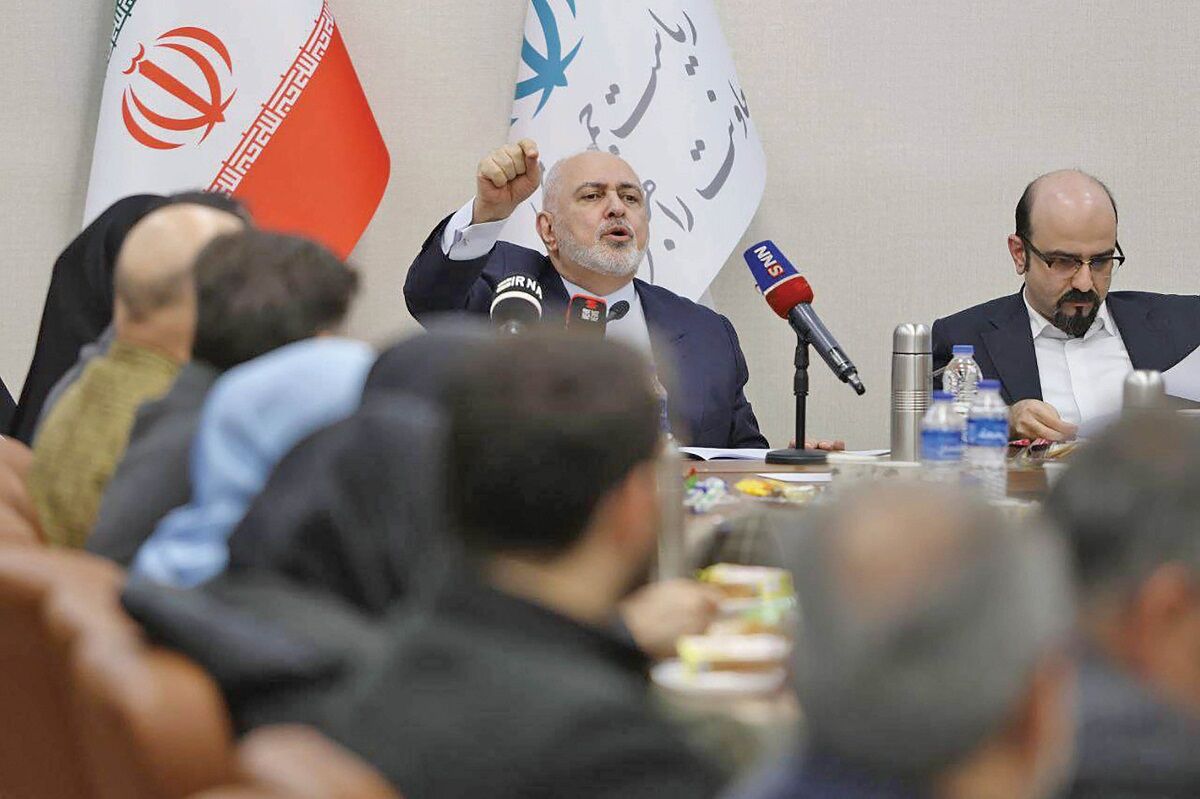
The interview was in Persian and the translation below was done by Ai.
The processes within the government could have facilitated Mr. Zarif’s work. But it was not. If we do not call it obstructionism, it even seemed that there were some shortcomings in the government that caused his complaint about the lack of support against the Sensitive Occupations Law. The formation of a new deputy needed more support from the president and the government, which unfortunately did not happen.
Pointing out that Zarif is very humble and capable, he added: “They compensated for some of it from their personal resources, but in any case, the accumulation of complaints caused this to happen. Unfortunately, the bill to amend the sensitive occupations law was not drafted as intended, and the orders that were issued to remove compulsory citizenship from this law were not carried out, and friends were seeking to solve their own problem in drafting the bill, and for this reason the bill was withdrawn from the parliament because all self-acquired and... which was the goal of the law was also included in these amendments. In fact, they made Mr. Zarif's presence the cost of solving their own problem. The problem cannot be solved in this way, and friends who themselves and their children had acquired citizenship were seeking to solve their own problem. For this reason, they refused to solve a problem that had unjustly befallen Mr. Zarif."
In response to the question whether Mr. Zarif paid for the repairs to the deputy's building himself, Karimi said: "Not the repair costs, but the cost of building a large hall for 80 people; and that from non-governmental sources."
Regarding Zarif's resignation, he emphasized: "He did not resign, and his perception is that he has been dismissed. These two concepts are very different. Now, those who want to cover up their mistakes or those who are extremely afraid of all tendencies are trying to label him with things like resigning and so on. On the other hand, one hundredth of these internal and external pressures and labels that Zarif is enduring will cause everyone else in Iran to be eliminated or resign. They want to confront Zarif with these labels and pressures. Because they are unable to confront him in any other way and are trying to smear him.”
The Deputy for Political and International Affairs of the Presidential Strategic Affairs Office emphasized: “In any case, Mr. Ejei, the head of the judiciary, invited him and the explanations he gave about the referral of the case by the parliament to the Administrative Court of Justice have created the perception in Mr. Zarif that it has been set aside and he actually agreed to this. Therefore, this does not mean “resignation.”
He pointed out that Zarif has not been to the strategic deputy since then, and said: "He went back to university." In response to the question of what role Zarif could have played in the Pezizian government that led to so much pressure, Karimi said: "Our country is facing serious challenges and super-challenges, crises and super-crises, of which a few imbalances and... have been felt by the people, and a larger number and more important aspects will be felt in the future, and it requires cross-sectoral and cross-subject strategic perspectives that require a specific mental capacity and precise theoretical nobility that I have not seen in the current government except for Mr. Zarif. The number of specialized human resources who can have large-scale strategic designs is very small, which is very different from other people who are looking for current and everyday actions. In order to move towards designing a solution to the country's cross-sectoral and cross-border problems in strategic horizons, a first-class team (whose void was completely felt in the government) was needed."
The Deputy for Political and International Affairs of the Presidential Strategic Office emphasized: “Zarif should have been removed from the orbit so that the weaknesses of others would not be seen.”
In response to the question of Mr. Pezzekian’s position on this resignation, Karimi said: “Mr. Pezzekian initially opposed Mr. Zarif’s perception and did not agree with Mr. Ejei’s opinion. As far as I heard, he wanted Zarif to return, but the internal conditions of the government and the attacks from outside the government over the past six to seven months have challenged the conditions for supporting Mr. Zarif. In addition, Mr. Pezzekian has not taken a public position in the past 72 hours, and I personally understand this action as a lack of support for Zarif.”
In response to the question of why there were dualities about working in parallel with the Ministry of Foreign Affairs? Had a special diplomatic working group been established in the Strategic Office? He said: “The Strategic Office had four deputies, including the Deputy for Political and International Affairs, the Deputy for Economic Infrastructure, the Deputy for Social and Cultural Affairs, and the Deputy for National Strategies. Mr. Zarif’s weight in international issues has naturally made the political and international deputy more visible. If Mr. Tayebnia is the strategic deputy, economic issues will naturally take on more color. However, there was no intention to work in parallel, and we have regular weekly meetings with several deputy ministers of the Ministry of Foreign Affairs.”
Karimi emphasized: “Mr. Zarif also has a personal side that is the result of his capabilities and background. He was the strategic deputy, but this does not mean that all the deputies necessarily behave at the same level. It is clear that instead of using these capabilities, we are more afraid of them and are constantly looking for superficial discussions, such as telling a good player like Ronaldo not to score and letting the others score.”
Hammihan Link

File